
The Myth of Resilience: Why Pushing Harder Isn’t the Answer — and What Actually Works
Practical strategies for professionals to reduce stress, restore energy, and prevent burnout.
Burnout is no longer rare — it’s the new normal. A 2025 survey of 2,000 UK workers by PPL PRS found that 75% had experienced work-related burnout in the past year, and 28% within the last month. The top causes? Heavy workloads (53%), long hours (46%), and unrealistic expectations (34%).
These numbers make it clear: burnout is rarely about personal weakness — it’s about systemic pressures and overstimulation.
Our culture glorifies “Work Hard, Play Hard,” and with emails, messages, and notifications constantly pinging, our brains and nervous systems are rarely given a true break. The result is rising sickness absence: according to CIPD, UK employees took an average of 9.4 sick days last year, nearly double pre-pandemic levels. 11% of this was due to mental health reasons such as stress, anxiety, or depression.
Why resilience alone isn’t enough
I’ve been there myself. In a high-pressure role with extensive travel, I met every target and earned higher bonuses — yet I felt constantly drained.
It wasn’t until I started prioritising short, daily holistic practices that my nervous system began to recover. Even a few minutes of intentional care each day can make a tangible difference.
3 practices to regulate your nervous system
Here are three practices I rely on when time is limited:
1. Breathwork
Your breath is a natural tool for calming the nervous system. Before a meeting or presentation, shallow breathing can trigger fight-or-flight, reducing focus and decision-making.
Box Breathing is simple and portable: inhale for 4, hold 4, exhale 4, hold 4. Adding a visualisation, like tracing a square with your breath, can enhance the effect. You can do this anywhere — even on your way to a meeting.
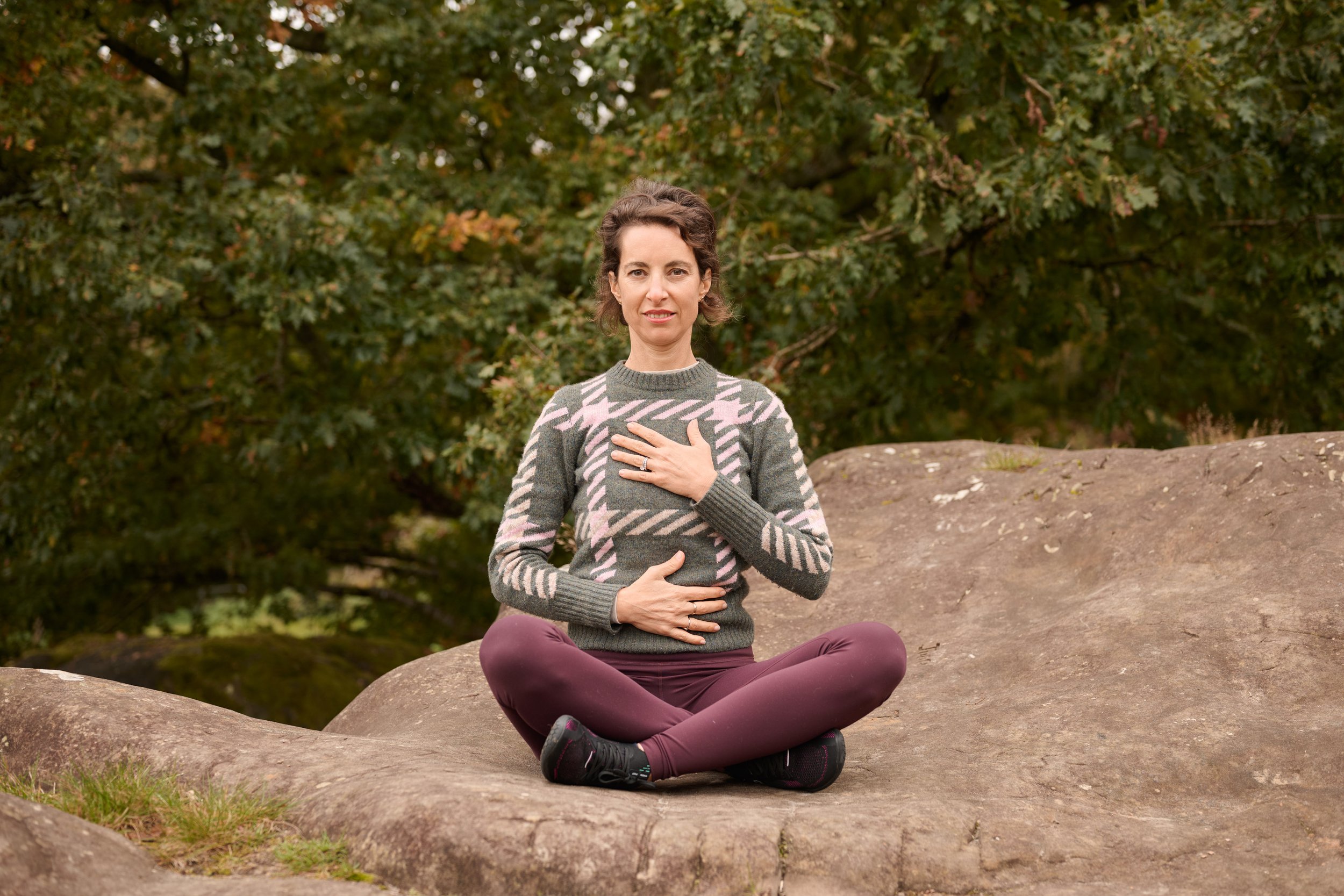
Tuning into your body and breath is the first step to restoring balance and reducing stress.
2. Qigong (Moving Meditation)
Qigong is a gentle energy practice that regulates the nervous system and supports organ function through flowing movements. Practiced in alignment with natural cycles, it combines precision and playfulness to reduce stress and increase vitality — a simple way to recharge without leaving your home or office.
3. Active Rest & Yoga Nidra
Not all rest is equal. Passive rest, like watching TV, still keeps the brain active.
Yoga Nidra, or “yogic sleep,” takes the mind into a state between wakefulness and sleep (Pratyahara), helping the nervous system reset. Setting a Sankalpa, a short personal intention like “I am calm” or “I am resourceful”, reinforces clarity, calm, and focus.
While not a replacement for sleep, a 30–40 minute session can leave you feeling profoundly refreshed.

Nature provides a gentle reminder to slow down, breathe deeply, and reset your nervous system.
Why this matters for professionals
These practices are small, achievable, and immediately beneficial — giving your body and mind the balance needed to handle high workloads effectively.
As Traditional Chinese Medicine has long taught, active, restorative practices are essential for optimal performance. Investing in these micro-recovery moments allows you to perform better, make clearer decisions, and protect your energy over the long term.
Want to try it?
I’ve created a free resource, the 3-Day Nervous System Reset, with short, practical exercises to restore energy and clarity:
3-Day Nervous System Reset | Relax, Restore & Recharge with Candice Yoga
About Candice Machtus
Candice Machtus is a Yoga Alliance Professionals-accredited Yoga and Qigong teacher based in Tonbridge, Kent. She supports busy professionals to restore balance, energy, and clarity through embodied movement and nervous system regulation.
Find out more at www.candiceyoga.co.uk
