
Your Body Knows How to Calm Itself (Part 2): The Practices That Help It Do Just That
This is Part 2 of a two-part series. Part 1 explores the mindset behind exhaustion — why so many of us can’t switch off, and the guilt that keeps us stuck. Read it here: Why Rest Is Not a Reward: Burnout, Guilt & Recovery for Busy Women — Candice Yoga.
In Part 1, I wrote about the mindset that keeps so many of us running on empty — the guilt around rest, the belief that worth has to be earned, the difficulty of genuinely stopping even when we know we should.
But here’s the thing: you don’t have to have that all figured out to start feeling better. The body doesn’t wait for the mind to catch up. And that is genuinely good news.
This is where I want to talk about the body — specifically, what happens in it when we’re under sustained stress, and the simple practices that can begin to shift that, without needing to think your way to calm first.
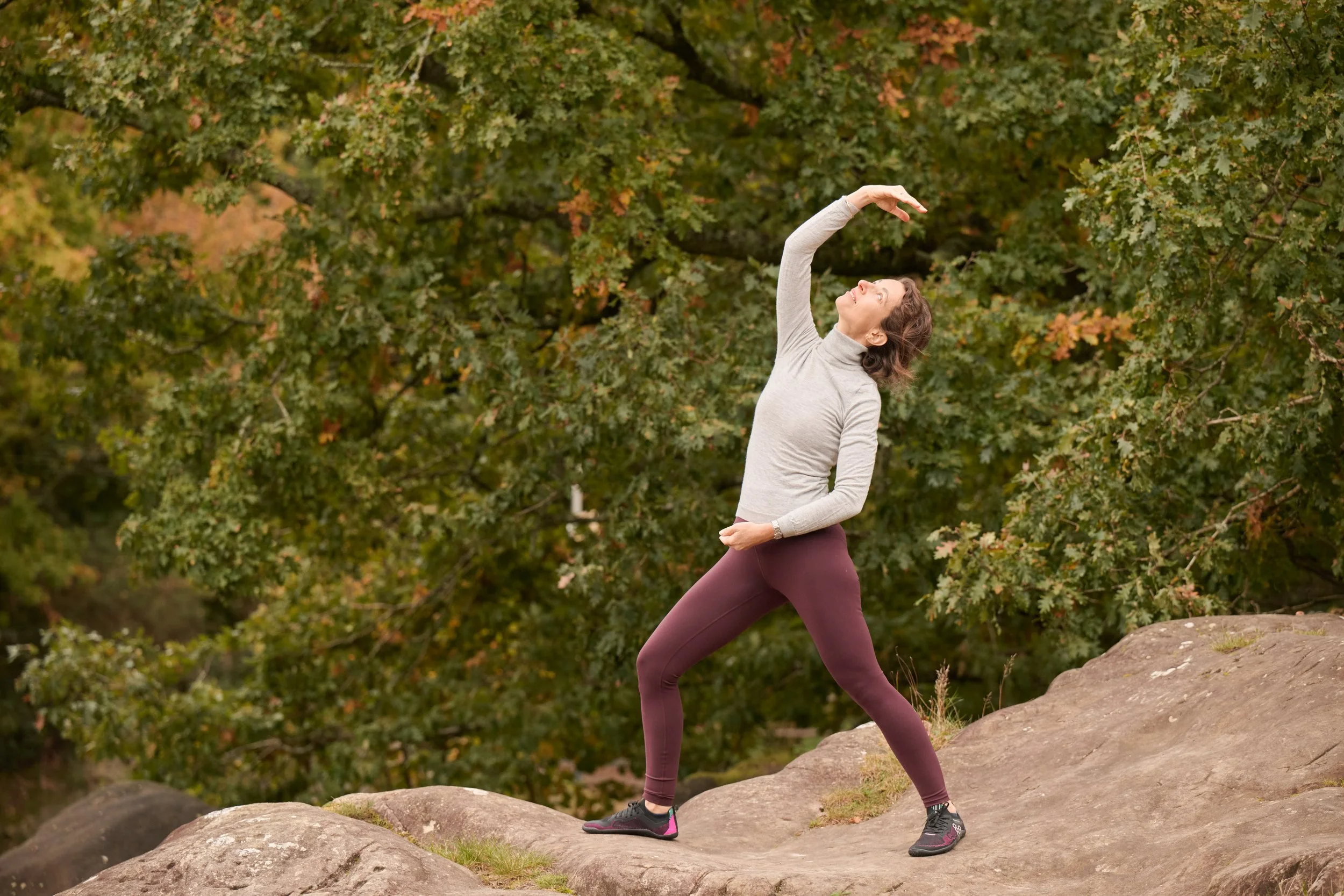
The body doesn't wait for the mind to be ready. It responds the moment you give it the right conditions.
Why Working With the Body Works When the Mind Won’t Cooperate
When we’ve been under stress for a long time, the thinking mind becomes part of the problem. It analyses, worries, plans, replays. Telling it to relax is a bit like telling someone in the middle of a panic attack to calm down. The instruction and the capacity to follow it are operating on different circuits.
Body-based practices work differently. Rather than going through conscious thought, they speak directly to the nervous system. Research published in medical literature proposes that practices like yoga and breathwork help correct underactivity of the parasympathetic nervous system — in part by stimulating the vagus nerve, the main peripheral pathway of the ‘rest and digest’ response. We bypass the spinning wheel of the mind and send a message of safety directly to the brain.
The Vagus Nerve: Your Body’s Built-In Calm Switch
Running from the brainstem all the way to the gut — with branches reaching the heart, lungs, throat and digestive organs — the vagus nerve is the primary component of the parasympathetic nervous system. When it’s stimulated, it calms the body after stress, lowers heart rate and supports digestion and recovery.
The gut has so many nerve endings that it’s sometimes called the second brain. This is why the vagus nerve is often referred to as the backbone of the brain-gut axis — it’s the highway between the two. When the mind can’t relax, stimulating the vagus nerve from the body’s end of that highway can send a message upward: it’s safe to let go now.
The good news is that we can actively stimulate it — and it doesn’t require equipment, expertise, or even very much time.
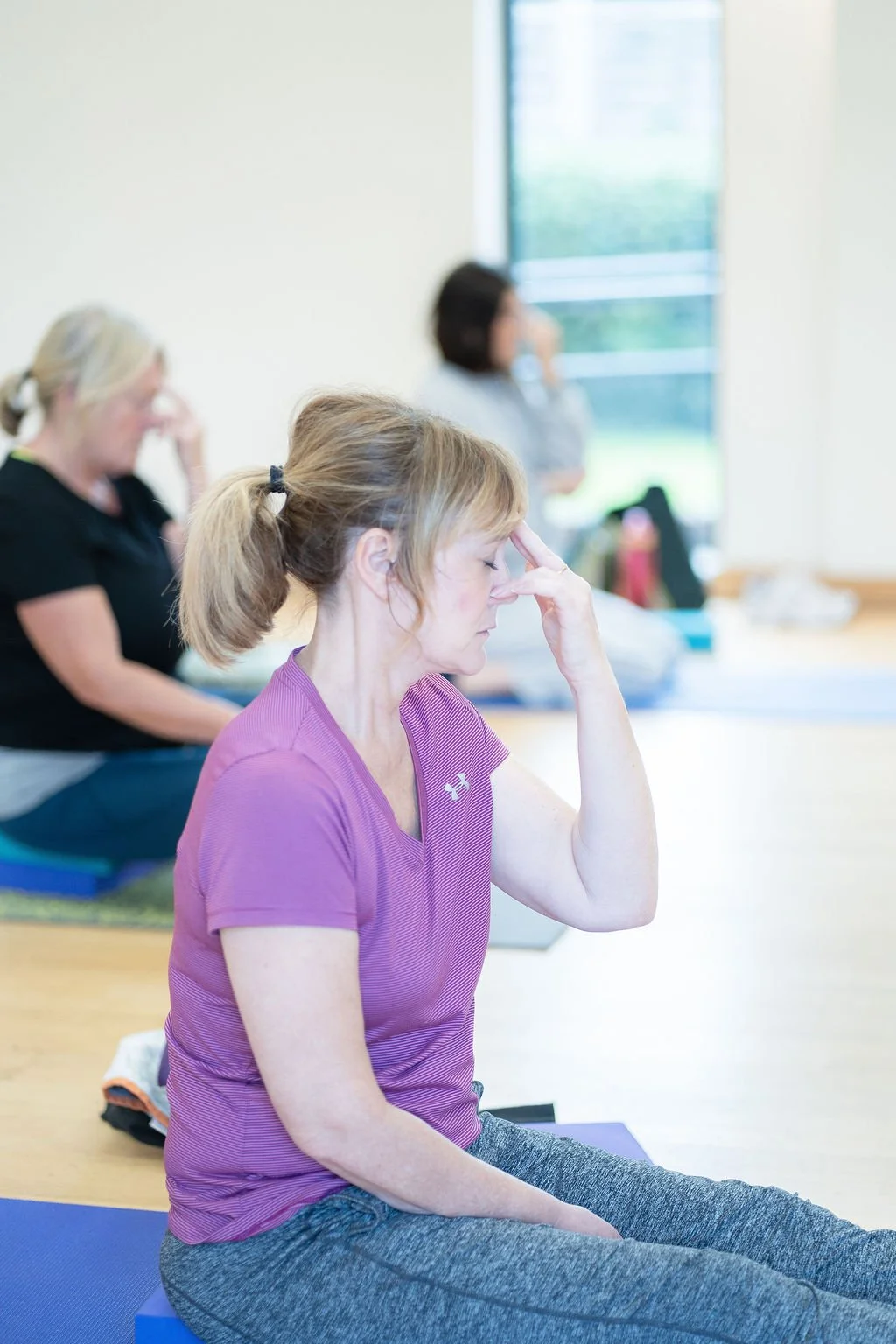
One long exhale. That's where it starts.
The Breath: The Most Accessible Tool You Have
Breathing is part of the autonomic nervous system — it happens whether we think about it or not. But unlike most automatic functions, we can choose to alter it. And that choice has a measurable effect on our entire physiology.
Shortening the exhale activates the sympathetic nervous system — the stress response. Lengthening it activates the parasympathetic nervous system and the vagus nerve. Research confirms that slow, rhythmic diaphragmatic breathing with an extended exhale shifts the autonomic nervous system toward the parasympathetic state, stimulating vagal activity and lowering physiological arousal.
You don’t need to breathe in any particular way for most of the day. But when you notice your shoulders are up around your ears, or your thoughts are spiralling, or you’ve been staring at a screen for two hours without a real pause — that’s the moment to consciously lengthen the out-breath.
Humming: The Technique Most People Haven’t Tried
The vagus nerve is connected to the vocal cords. This means that the vibrations created by humming, chanting or even gargling physically stimulate it — in a way that is immediate and surprisingly powerful.
A technique I love teaching combines the lengthened exhale and humming together. Here’s how it works:
Inhale slowly through the nose for a count of three. On the exhale, begin to hum — a low, steady sound — continuing until the breath naturally ends. Repeat four to five times.
With beginners, I add a body scan layer: hands resting on the abdomen for the first breath, moving to the ribs, then the chest, the throat, and finally the thumbs resting gently at the entrance to the ears. Each hand placement brings attention into the body and out of the head. Combined with the hum and the lengthened exhale, it is one of the most quickly calming techniques I know. And it can be done in your car, in the bathroom, in five minutes between meetings — no mat, no props, no prior experience required.
Qigong: What It Actually Feels Like
I’ve written elsewhere about the origins and science of Qigong — its roots in Traditional Chinese Medicine, the meridians, the five seasons. But what I want to describe here is something different: what it actually feels like to be in a Qigong class, because I think that’s what matters when you’re deciding whether to try it.
The first thing most people notice is the permission. There is no requirement to be flexible. No requirement to be fit. No particular body shape or age or fitness level that makes Qigong more or less available to you. The practice genuinely meets you where you are — not as a reassuring phrase, but as a structural feature. If your energy is low, you move to a third of your usual effort. If you have more that day, you use more. The movements adapt to you, not the other way around.
The second thing people often notice is that it’s harder to think about their to-do list than they expected. The forms — the specific movement sequences in Qigong — are precise. Not complicated, but deliberate. The position of the hands, the arc of the arms, the intention behind each movement all require a quality of attention that quietly fills the space where anxious thought usually lives. People often leave a class surprised by how present they felt — not because they tried to be mindful, but because the movements asked it of them naturally.
And then there’s the playfulness. Many of the forms I teach are animal forms — the crane, the deer, the bear. As you learn them over weeks, you refine them. There’s a satisfying quality to that, a sense of getting somewhere, of mastering something small. The animal forms are also deeply nature-inspired, which brings its own kind of calm. And because the practice changes with the seasons — each season bringing different movements, different organs, different qualities of energy — it never feels stale. You’re never doing the same practice twice in exactly the same way.
From a physiological perspective, Qigong is now well recognised for its ability to activate the parasympathetic nervous system and regulate the vagus nerve. The slow, rhythmic movement combined with the deep diaphragmatic breathing at its core produces the same extended exhale effect I described above — but woven into a moving, engaging, seasonally alive practice. Harvard Medical School has described it as ‘moving medication’ for this reason.
A Word on Yoga Nidra (Deep Rest)
I’ve written about Yoga Nidra in more depth in previous posts, so I won’t repeat it all here. But since this series is about rest, it would feel incomplete not to mention it.
Yoga Nidra — sometimes called yogic sleep or Deep Rest — is a guided practice done lying down, designed to bring the body and mind to the threshold between waking and sleeping. In that liminal state, the nervous system resets deeply. Research shows it can reduce cortisol levels, improve sleep quality and increase heart rate variability, a key marker of nervous system resilience.
For anyone running on fumes, it is one of the most restorative practices available. And it requires nothing from you except the willingness to lie still and listen.
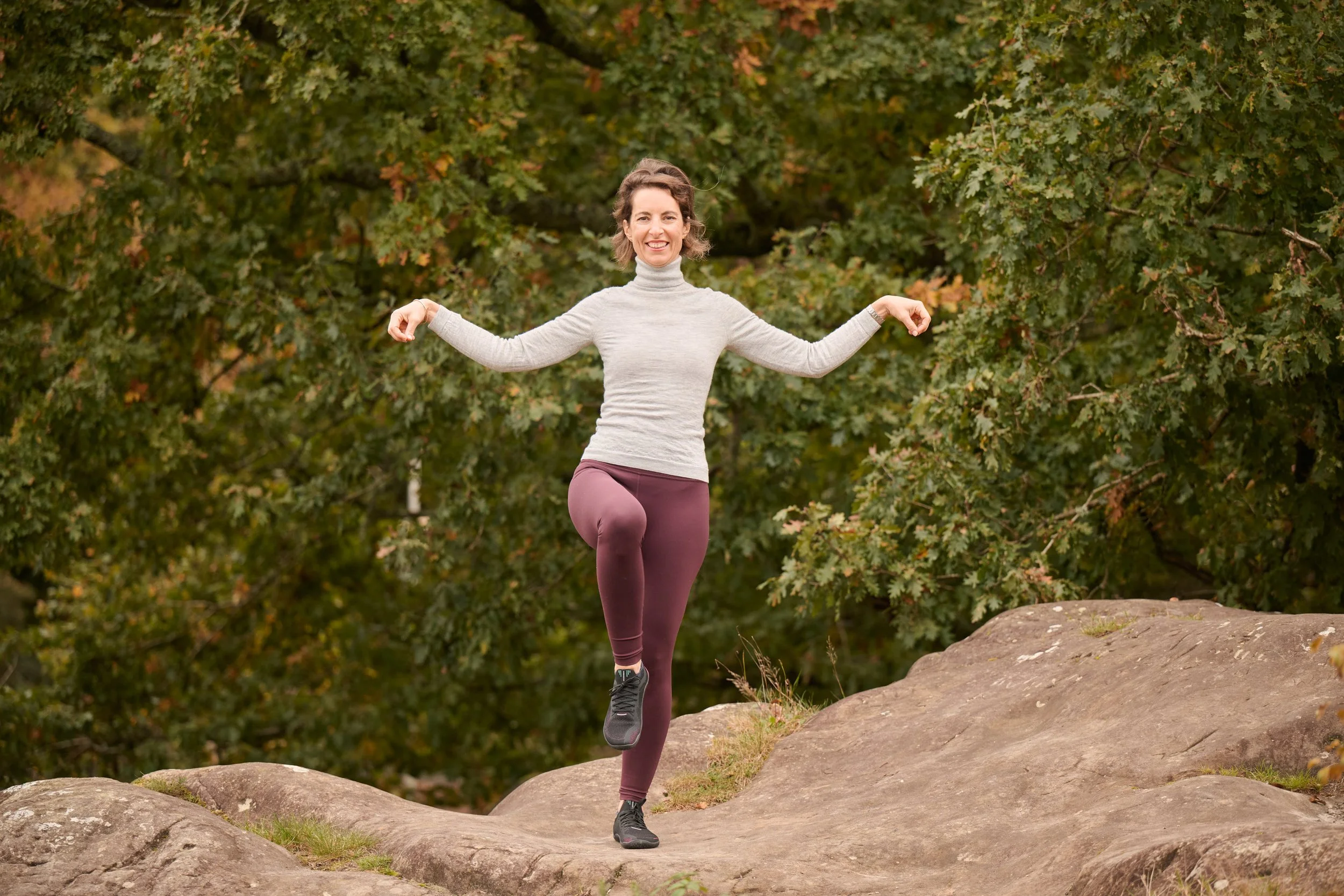
Precise enough to quiet the mind. Gentle enough for any body.
You Don’t Have to Start With the Mind
If the mindset piece in Part 1 felt too much right now — too close, too difficult, not quite ready — that’s completely understandable. Years of conditioning don’t unravel in a single reading. But the body doesn’t require that you be ready. It responds to these practices regardless.
A few minutes of humming on the exhale. A Qigong class on a Tuesday evening. Fifteen minutes of Yoga Nidra on the sofa. None of these require belief, or insight, or having done the inner work first. They work through the body, and the brain follows.
Change doesn’t require a leap. It just requires one small, consistent step.
Want to try it?
I have created a Rest Without Guilt, 12-Week Programme, helping to prevent you from Burning out. It is designed primarily for ambitious women in leadership roles but it can be done by anyone who is ready for a change. More information can be found here: Burnout Prevention for Professionals | Nervous System Educator Candice Machtus — Candice Yoga
About Candice Machtus
Candice Machtus is a Yoga and Qigong teacher based in Tonbridge, Kent. She supports busy people to restore balance, energy, and clarity through embodied movement and nervous system regulation.
Find out more at www.candiceyoga.co.uk
FAQs: The Vagus Nerve, Breathwork and Qigong
What is the vagus nerve and why does it matter for stress?
The vagus nerve runs from the brainstem to the gut and is the primary pathway of the parasympathetic nervous system — the system responsible for rest and recovery. When stimulated, it helps calm the body after stress, lower heart rate and restore a sense of physiological safety. Practices like breathwork, humming, yoga and Qigong all activate it.
How does lengthening the exhale help with anxiety?
A longer exhale directly stimulates the vagus nerve and shifts the nervous system toward the parasympathetic ‘rest and digest’ state. It counteracts the shallow, rapid breathing that accompanies anxiety and stress, and can produce a noticeable calming effect within just a few cycles of breath.
What is Qigong and is it suitable for complete beginners?
Qigong (pronounced ‘chee gung’) is a gentle practice combining slow, precise movement, breathwork and intention. It is completely suitable for beginners — there is no flexibility or fitness requirement, it can be done seated or standing, and the practice adapts to your energy on any given day. Most beginners are surprised by how quickly they feel the benefits: a sense of calm, reduced tension, and clearer energy.
Why do the animal forms feature in Qigong?
Qigong has its roots in ancient shamanic practices where humans mimicked animals in ritual movement. The animal forms — the crane, the deer, the bear and others — are part of that living tradition. They also happen to be one of the most memorable and playful aspects of the practice, and the precision they require makes them particularly effective at drawing the mind into presence.
What is Yoga Nidra and how is it different from meditation?
Yoga Nidra, sometimes called Deep Rest, is a guided practice done lying down. Unlike most meditation, which involves an upright posture and active attention, Yoga Nidra guides you to the edge of sleep — a deeply restorative state where the nervous system can reset. It requires no prior experience and no effort, just the willingness to lie still and follow a gentle voice.
I don’t have time for long practices. Can short ones really make a difference?
Yes. Even five minutes of conscious breathwork, or one short Qigong sequence, is enough to begin shifting the nervous system toward calm. The key is consistency rather than duration. Little and often is far more effective than one long session once a fortnight.
Where can I try Qigong or Yoga Nidra near Tonbridge?
I teach weekly Yoga and Qigong classes in Tonbridge and online. I also offer Yin and Yoga Nidra classes, private sessions, and regular retreats. You’ll find the full schedule at www.candiceyoga.co.uk.
